Mobile detailing for car dealerships: complete 2026 guide
November 4, 2026 · 11 min read · Frogman Detailing
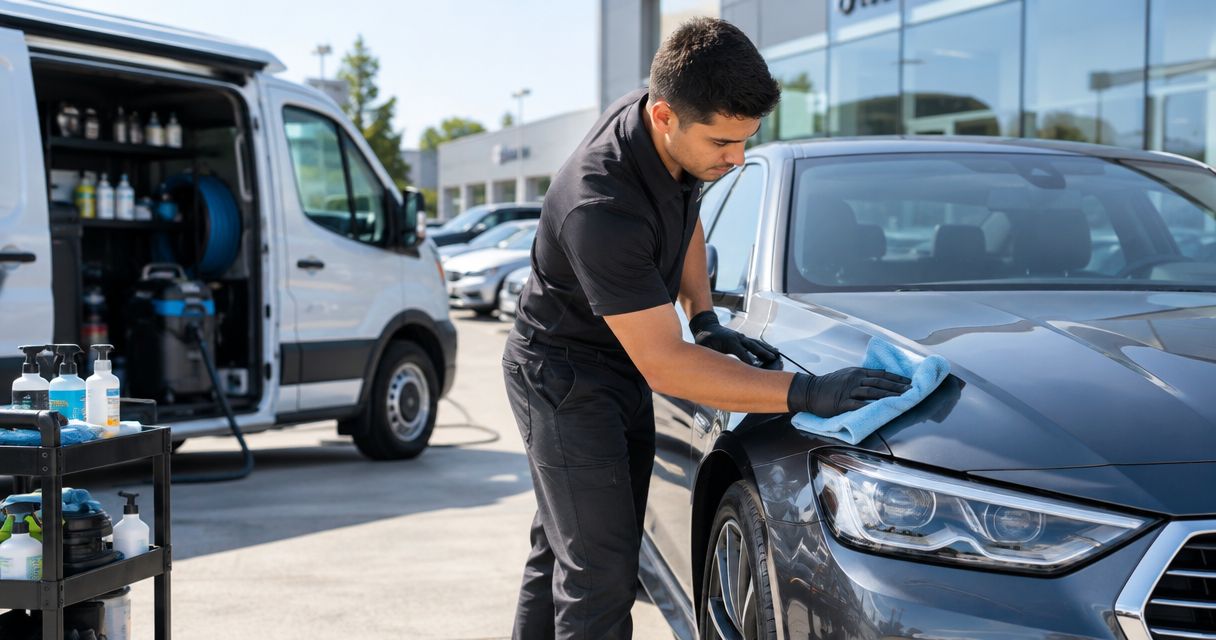
Car dealership mobile detailing is on-site vehicle cleaning and preparation aimed at getting inventory ready for photos, test drives, and delivery. This guide to mobile detailing for car dealerships covers the job list, vendor checks, lot setup, and handoff standards that keep detailing from becoming another task your sales team has to chase.
TL;DR
- Mobile detailing for car dealerships works best with written vehicle scopes and a clear inspection handoff.
- Frogman Detailing provides mobile car detailing at customers' driveways across the Oklahoma City metro.
- Confirm dealership-site service, capacity, insurance, and utility needs before assigning inventory.
- Separate inventory cleaning, paint correction, and repairs. They are different jobs.
A dealership needs more than a clean car. You need the right stock number cleaned, the keys returned, and the vehicle released before somebody promises a test drive. Start with Frogman Detailing's detailing services when checking service fit, then confirm whether your dealership location and workload are suitable.
Why mobile detailing matters for car dealerships
A retail driveway appointment involves a customer's vehicle. A dealership assignment adds inventory control, employee access, photography, and delivery deadlines. The cleaning matters. So does everything around it.
On-site work removes the trip to an outside detail shop from that assignment. It does not remove the need for parking space, safe working conditions, or a person authorized to approve changes. A mobile provider cannot solve a missing-key problem with a vacuum.
The best dealership detailing process starts with a written scope, not a blanket request to make every vehicle look new. A fresh trade-in, a dusty display vehicle, and a sold unit need different attention.
For your 2026 process, judge the arrangement by completed handoffs, documented exceptions, and vehicles ready for their next task. Do not treat a shiny hood as proof that the whole job is finished.
Build a detailing process your lot can actually use
1. Sort inventory by its next job
Start with a spreadsheet or a paper board. Record the stock number, current condition, next task, and person responsible for releasing the vehicle. You do not need another software subscription to stop confusing a delivery vehicle with tomorrow's photo car.
Inspect each vehicle before assigning work. Check the seats, carpets, cargo area, glass, wheels, and exterior finish. Record existing damage separately from dirt. Cleaning a scratch does not remove the scratch.
Use 3 work categories as a starting point: intake cleaning, photo preparation, and delivery preparation. These are internal job labels, not packages you should assume a provider sells. Adjust the scope to the condition of the actual vehicle.
A vehicle awaiting mechanical diagnosis also needs a clear status. Avoid scheduling finished presentation work before a repair that will disturb the cleaned area.
- Intake cleaning: expose the condition of a newly acquired vehicle.
- Photo preparation: remove visible dirt and cabin clutter before photography.
- Delivery preparation: check the vehicle after repairs and test drives.
- Exception hold: flag leaks, unknown residue, or damage needing assessment.
2. Write a finish standard people can inspect
Build your standard with a checklist and reference photos from your own inventory. Write down what completion looks like. Words such as premium, showroom, and immaculate leave too much room for argument.
For an interior job, specify the areas included. Seats and carpets are not the same assignment as seats, carpets, cargo storage, door pockets, and the spare-wheel compartment. Tell the provider about heavy pet hair, smoke odor, or spills before work begins.
Exterior instructions need the same discipline. State whether you need routine cleaning or an assessment of bonded contamination, water spots, or paint defects. Do not casually authorize abrasive work on an unfamiliar finish.
Set 3 inspection checkpoints: before work, after cleaning, and before release. That is a proposed control process, not a promise about how long detailing takes. The same checklist should follow the vehicle through all three.
- List included surfaces and compartments.
- Photograph visible damage before cleaning.
- Separate cleaning from correction or repair.
- Record odor concerns without promising complete removal.
- Name the employee who accepts the finished work.
3. Check the provider before assigning a batch
Ask providers the same questions and compare the answers in writing. Confirm site suitability, vehicle types, insurance documentation, utility requirements, and who handles an unexpected condition. A professional conversation beats guessing from a gallery of shiny cars.
Frogman Detailing is best for Oklahoma City metro drivers who want mobile detailing at their driveway. The veteran-owned business serves car, truck, and motorcycle customers, including Edmond and Arcadia. A dealership should confirm commercial-site work, batch capacity, and scheduling directly before treating that driveway service as a dealership arrangement.
Start with 1 vehicle as a pilot assignment. Choose a representative unit, not the cleanest car on the lot. Check the finished work and handoff before assigning a longer list.
For a 2026 vendor file, keep the agreed scope, current documentation, and escalation contact together. Do not mistake a booking confirmation for an agreement about inventory volume or delivery deadlines.
- Ask whether the provider accepts dealership-site assignments.
- Confirm insurance documentation relevant to the proposed work.
- Describe actual vehicle condition before requesting a scope.
- Agree who approves additional work.
- Review the pilot vehicle before expanding the assignment.
4. Prepare a safe place to work
Walk the proposed work area yourself. Check whether doors can open without entering a traffic lane and whether equipment would block customer parking, vehicle movement, or emergency access. An empty parking space is not automatically a suitable detailing space.
Ask about water, electricity, drainage, shade, and weather limitations. Do not assume a mobile provider supplies every utility or can complete every task outdoors. Confirm how wash water will be managed under applicable site requirements before work starts.
Keep the keys and authorization process simple. Assign a dealership employee to move vehicles unless a different arrangement has been explicitly approved. Store removed customer property securely and record where it went.
Make a weather fallback part of your 2026 plan. Decide who postpones the work, where an unfinished vehicle waits, and who tells the sales team. That conversation belongs before the appointment, not during a downpour.
- Reserve a work area away from customer traffic.
- Confirm water and electrical requirements.
- Establish the wash-water handling plan.
- Identify the authorized vehicle mover.
- Agree on weather interruptions and secure storage.
5. Schedule backward from photos and delivery
Use a shared calendar or an inventory board before buying scheduling tools. Put the next vehicle task on the calendar, then agree on a workable detailing window with the provider. Never promise a generic completion time for an unseen trade-in.
Sequence work around repairs. A windshield replacement, upholstery repair, or dusty workshop visit can disturb a finished detail. Tell the provider what still needs to happen so the same surface does not get cleaned twice without a reason.
Build the queue around actual commitments. A sold vehicle with an agreed handoff needs different treatment from inventory waiting for a listing refresh. Give the provider a clear priority order instead of letting whoever has the keys choose.
For your 2026 calendar, keep appointment status separate from readiness status. Scheduled does not mean started. Finished does not mean inspected. Inspected does not mean released to a customer.
- Record the stock number and next required task.
- Identify repairs that must happen before detailing.
- Agree on the day's priority order.
- Leave room for inspection and any agreed rework.
- Notify the sales team when a vehicle is released.
6. Inspect the vehicle and record the handoff
Use the original checklist rather than relying on memory. Look at glass from inside and outside. Check seat seams, cupholders, door jambs, cargo edges, and the areas hidden by removable mats.
Separate missed cleaning from permanent defects. A stained carpet, worn bolster, or etched finish needs an honest description, not an automatic accusation that the detailer skipped it. Refer back to the intake photos and agreed limitations.
Check for remaining moisture before placing mats over cleaned carpet or releasing the vehicle. Follow the provider's drying instructions. A cabin can look ready before every cleaned material is ready for normal use.
Review repeat issues with the provider. If the same compartment gets missed, add it to the checklist or clarify the scope. If vehicles are routinely unavailable when scheduled, fix the dealership's side of the process too.
- Match the vehicle to the correct stock number.
- Inspect every area listed in the scope.
- Record unresolved defects and remaining moisture.
- Return keys and removed property through the agreed handoff.
- Mark the vehicle released only after acceptance.
The handoff sequence should be visible to everyone who touches inventory. Keep the labels short enough to read at a glance.
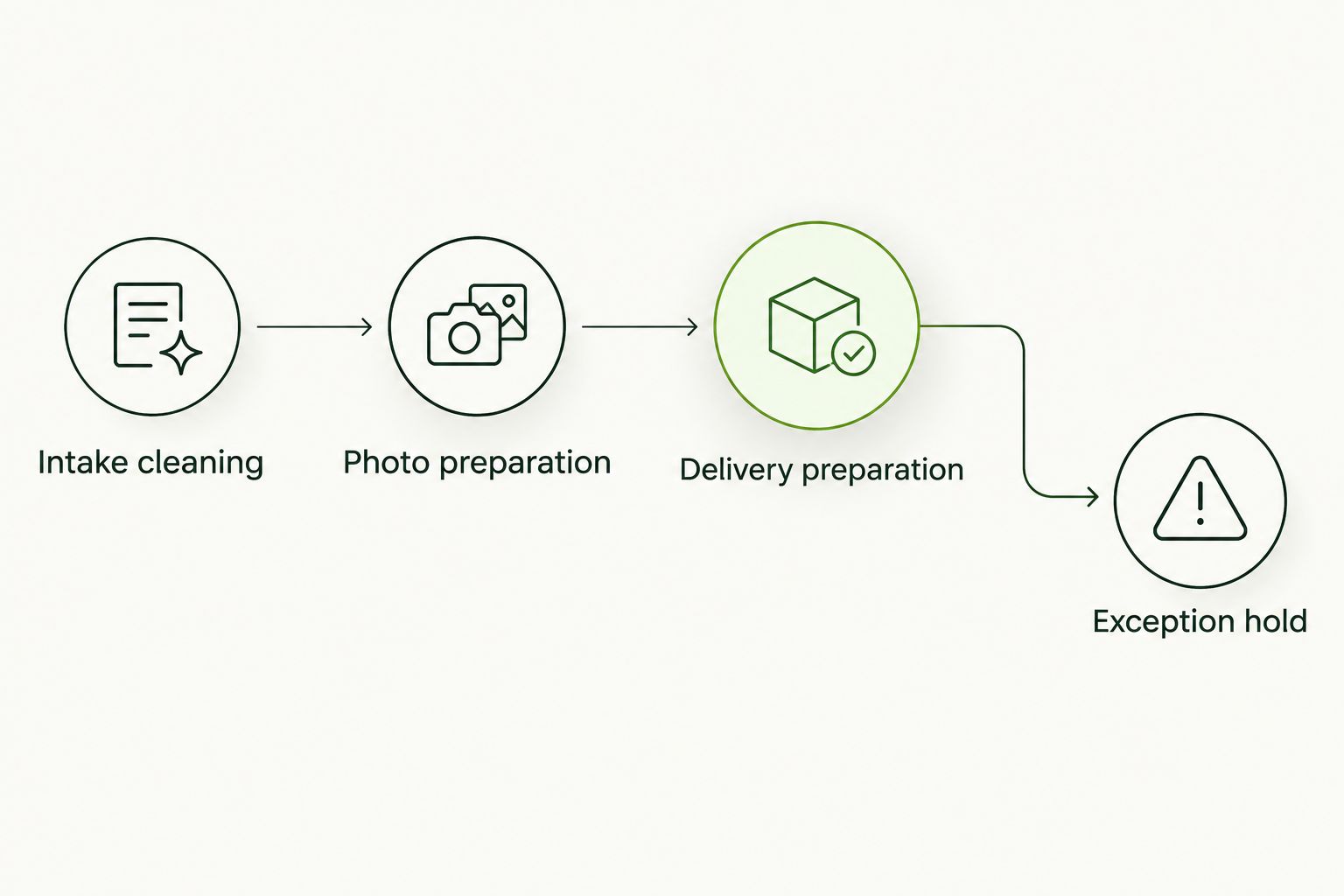
A vehicle with an unresolved condition belongs on hold, not in the ready queue.
Compare your dealership detailing options
Choose the operating model around your actual workload and site. No option removes the need for inspection, and no provider should inherit an undefined promise to make every trade-in perfect.
| Option | Best for | Main advantage | Key limitation |
|---|---|---|---|
| Existing staff and checklist | Light presentation upkeep between appointments | Direct control over the daily queue | Staff need training, equipment, and protected working time |
| In-house detailing operation | Dealers prepared to manage their own cleaning workflow | Work stays under dealership supervision | Requires space, staffing, maintenance, and quality control |
| Mobile detailing provider | Suitable sites wanting work completed on location | Removes the outside-shop trip from the assignment | Site conditions, weather, and confirmed capacity constrain the work |
| Fixed-location detail shop | Vehicles needing work arranged at a dedicated shop | Separates detailing from lot traffic | Requires transport and a clear custody handoff |
| Mixed arrangement | Dealers separating routine upkeep from specialist work | Matches different jobs to different resources | Needs clear ownership so work is not duplicated |
Ask each provider to define exclusions before comparing proposals. A routine interior clean and extensive contamination removal are not equivalent jobs. Neither are a maintenance wash and paint correction.
Common mistakes dealerships make
Calling every job a full detail
A vague work order creates a vague result. Name the required areas and outcome instead of asking for whatever the provider considers full service.
Best fix: use a vehicle-specific checklist with an exceptions field. Keep unusual contamination and correction requests out of the routine queue until somebody approves the scope.
Treating mobile service as unlimited lot capacity
A provider that serves individual customers does not automatically offer standing dealership coverage. Confirm crew capacity, site acceptance, and scheduling before building a delivery promise around the appointment.
Best fix: evaluate a pilot assignment, then agree on additional work. Do not turn a successful appointment into an assumed volume commitment.
Detailing before the dirty work is done
Final cleaning loses its purpose when the vehicle immediately returns to repairs that disturb the cabin or finish. Check the repair order before assigning delivery preparation.
Best fix: put repair completion and detailing release on the same inventory record. Give both teams a clear handoff.
Hiding an odor under fragrance
A strong scent is not evidence that contamination has been removed. Record the suspected source and ask what cleaning can realistically address. Leaks and damaged materials need separate attention.
Best fix: inspect the cabin without adding fragrance to disguise the complaint. Describe unresolved odor honestly before a customer arrives.
Confusing clean with defect-free
Detailing does not repair torn upholstery, cracked trim, or every mark in paint. Photograph those conditions at intake so nobody expects a cleaning appointment to perform a repair.
Best fix: keep cleaning, correction, and repair as separate approvals. Different job. Different decision.
FAQ
What's the best way to start mobile detailing for a car dealership?
Start with a written scope and a pilot vehicle. Confirm site requirements, inspect the finished work, and agree on the handoff before assigning more inventory.
Does Frogman Detailing offer dealership fleet contracts?
Confirm dealership contracts directly with Frogman Detailing. The stated service is mobile car, truck, and motorcycle detailing at customers' driveways across the Oklahoma City metro; dealership-site coverage and batch capacity require confirmation.
Is mobile detailing better than an in-house dealership detailer?
Mobile detailing fits suitable sites that want on-location work without managing the entire detailing operation themselves. An in-house operation gives the dealer direct control but requires staff, equipment, space, and quality checks.
How long does dealership mobile detailing take per vehicle?
The working time depends on the vehicle's condition and the agreed tasks. Send condition photos and disclose pet hair, spills, and odor concerns before asking the provider to commit to a completion window.
Do mobile detailers need water and electricity at the dealership?
Utility needs depend on the provider's equipment and the proposed work. Confirm water, electricity, drainage, and weather requirements before reserving a work area.
Should a dealership detail cars before listing photos or before delivery?
Prepare the vehicle before listing photos, then inspect it again before delivery. Test drives, repairs, and outdoor storage can create new cleaning needs after the original preparation.
Can detailing remove every smell and scratch from a trade-in?
Detailing cannot guarantee removal of every odor or scratch. Identify the source or defect first, then separate cleaning from paint correction, material replacement, or repairs.
One last thing
Check the glass from the driver's seat before signing off. Walking around a clean vehicle does not show you the same streaks a customer sees through the windshield.
For your next assignment, send the location, vehicle condition, required tasks, and next inventory deadline through Frogman Detailing's contact page. Ask for confirmation of fit before promising a slot to your sales team. That is a cleaner handoff than hoping everybody understood the same thing.
Related guides
Frogman comes to your driveway across the Oklahoma City metro.